


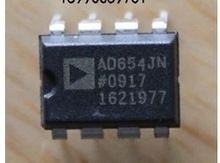
INSTRUMENTATION AMPLIFIER IC
100 INR/Piece
Product Details:
- Power Source External DC supply
- Resolution Analog continuous
- Thermal Conductivity Standard IC rating, ceramic/epoxy encapsulation
- Output Single-ended
- Usage Industrial and instrumentation applications
- Interface Analog
- Power Supply Dual 15V / Single 5V-36V
- Click to View more
X
INSTRUMENTATION AMPLIFIER IC Price And Quantity
- 100 INR/Piece
- 20 Piece
- Typically 50V
- 2kV Human Body Model
- Yes
- DIP-8, SOIC-8
- Up to 200pF
- 1
- Through Hole / Surface Mount
- 1 to 1000 (externally adjustable)
- Lead-Free
- JEDEC standard
- Instrumentation, Data Acquisition Systems, Medical Equipment, Transducer Interface
- 2.54mm
- >100 dB @ G10
INSTRUMENTATION AMPLIFIER IC Product Specifications
- Bandwidth up to 1 MHz depending on model
- Black
- Industrial and instrumentation applications
- DIP-8 / SOIC-8
- Signal amplification in measurement systems
- Analog
- Single-ended
- Standard IC rating, ceramic/epoxy encapsulation
- 5V to 18V
- 18V
- External DC supply
- Analog continuous
- Not rated for ingress protection
- -40C to +85C
- Typical Quiescent Current: 0.7mA per channel
- Precision resistors, operational amplifiers (OP-AMPs)
- Approx. 2 grams
- Dual 15V / Single 5V-36V
- High common-mode rejection ratio (CMRR), Low offset voltage, Adjustable gain
- Differential
- Optimized for bridge sensors, thermocouples
- 9.8mm x 6.4mm x 1.7mm
- Fast slew rate, typically 0.3V/s 1V/s
- Standard IC package, ~1.7mm
- Sensor interfacing, data acquisition, medical instrumentation, signal conditioning
- High input impedance, Low output impedance
- Instrumentation Amplifier IC
- Typically 50V
- 2kV Human Body Model
- Yes
- DIP-8, SOIC-8
- Up to 200pF
- 1
- Through Hole / Surface Mount
- 1 to 1000 (externally adjustable)
- Lead-Free
- JEDEC standard
- Instrumentation, Data Acquisition Systems, Medical Equipment, Transducer Interface
- 2.54mm
- >100 dB @ G10
Product Description
INSTRUMENTATION AMPLIFIER IC is an electronic component used to amplify low-level signals from various sensors or transducers in order to obtain a usable output signal. This type of amplifier is designed to have a high input impedance, low output impedance, and high common-mode rejection ratio (CMRR), making it particularly suitable for measuring small signals in the presence of large common-mode voltages or noise. INSTRUMENTATION AMPLIFIER IC has a gain and may include other features. It is commonly used in various applications that require high-precision signal amplification.
High-Precision Performance
Engineered with a low input offset voltage and exceptional CMRR, this instrumentation amplifier IC excels in applications requiring precise differential amplification, such as sensor interfacing and medical instrumentation.
Versatile and Adjustable Gain
The gain of the amplifier can be externally set from 1 to 1000, granting flexibility to optimize amplification for a wide range of signals from bridge sensors, thermocouples, or transducers.
Compliant and Reliable Packaging
Available in DIP-8 and SOIC-8, this IC accommodates both through-hole and surface-mount technologies, is RoHS-compliant, and constructed using ceramic/epoxy for durability and standard thermal conductivity.
FAQs of INSTRUMENTATION AMPLIFIER IC:
Q: How is the gain adjusted on this instrumentation amplifier IC?
A: The gain of the amplifier is externally adjustable by selecting appropriate precision resistor values, allowing you to set it anywhere between 1 and 1000 to suit your measurement needs.Q: What benefits does the high CMRR provide in industrial applications?
A: A high common-mode rejection ratio (>100 dB at G10) minimizes interference and noise pickup, ensuring accurate differential signal processing in environments prone to electrical noise, making it ideal for industrial and medical instrumentation.Q: Where can this instrumentation amplifier IC be used?
A: It is optimized for sensor interfacing, data acquisition systems, medical equipment, and transducer interfacestypically found in industrial, laboratory, and healthcare settings.Q: What is the typical process for mounting and connecting this IC?
A: The IC supports both through-hole (DIP-8) and surface-mount (SOIC-8) mounting. Simply follow standard PCB assembly procedures, ensuring correct supply voltages (5V to 18V), and connect differential input and single-ended output as per your application.Q: What power supply options are compatible with this amplifier?
A: It operates on a dual 15V power supply or a single supply ranging from 5V to 36V, providing flexibility for different system designs and environments.Q: What usage advantages does the low input offset voltage offer?
A: With a typical input offset voltage of just 50V, the IC reduces measurement error due to offset drift, making it suitable for high-accuracy applications with low-level sensor signals.Q: When should I use this IC for sensor interfaces?
A: Employ this amplifier when you need high input impedance, low output impedance, and fast response time for precise analog signal conditioning from devices such as bridge sensors or thermocouples.Tell us about your requirement

Price:
Quantity
Select Unit
- 50
- 100
- 200
- 250
- 500
- 1000+
Additional detail
Mobile number
Email

Other Products in 'Electronic Components' category



Contact Details
KK INTERNATIONAL
Mumbai, Maharashtra, India
Mumbai, Maharashtra, India

- Plot No. 305, Rajdeep Apartments, Tara Temple Lane, Near Lamington Road,Mumbai - 400007, Maharashtra, India
- Phone : 08045477473
- Mr Pratik Chouhan (Managing Director)
- Mobile : 08045477473
-
 Send Inquiry
 Send Inquiry
 Send Inquiry
 Send SMS
Quick Inquiry

 |
KK INTERNATIONAL
All Rights Reserved.(Terms of Use) Developed and Managed by Infocom Network Private Limited. |
