


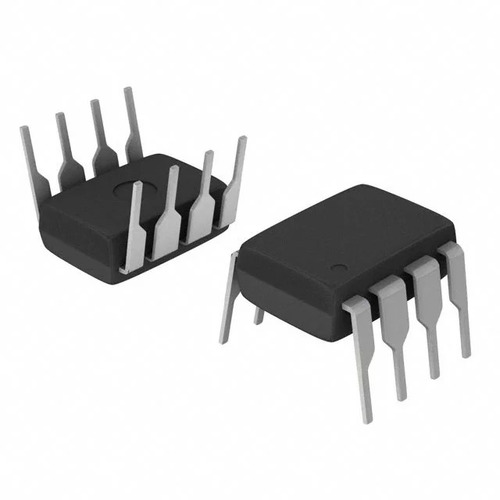
OP90GP
120 INR
Product Details:
- Components Transmitter module, terminal blocks
- Interface Screw terminal
- Power Supply 24V DC
- Sensors Specification Compatible with RTD, Thermocouple, Standard signals
- Output 4-20mA, 0-10V
- IP Rating IP20
- Resolution High accuracy signal conversion
- Click to View more
X
OP90GP Price And Quantity
- 25 Piece
- 120 INR
- 1500V AC
- 95% RH (non-condensing)
- DIN rail
- -40C to +85C
- 500
- Input/Output status LEDs
- Flame retardant ABS plastic housing
- 250
OP90GP Product Specifications
- 22.5mm Width
- PLC input/output signal isolation and conversion
- External 24V DC
- 0.5s
- 4-20mA, 0-10V, RTD, Thermocouple
- Input and Output: 4-20mA
- Galvanic isolation, compact design, DIN rail mounting, configurable input/output
- Industrial automation, sensor signal conversion
- Signal isolation amplifier for sensor inputs
- Approx. 110 x 22.5 x 110 mm
- -20C to +60C
- Approx. 110g
- Transmitter module, terminal blocks
- Screw terminal
- DC
- Green
- Isolated Signal Converter/Transmitter Module
- 22.5 mm
- 24V DC
- 24V DC
- Single channel
- Compatible with RTD, Thermocouple, Standard signals
- 24V DC
- High accuracy signal conversion
- 4-20mA, 0-10V
- IP20
- 1500V AC
- 95% RH (non-condensing)
- DIN rail
- -40C to +85C
- 500
- Input/Output status LEDs
- Flame retardant ABS plastic housing
- 250
OP90GP Trade Information
- All India
Product Description
Specification
| Average Bias Current Max IIB | 0.025 uA |
| Supply Voltage Limit Max | 18.0 V |
| Supply Current Max | 0.03 mA |
| Slew Rate Nom | 12000.0 V/us |
| Power Supplies | +-1.5/+-15 V |
| Operating Temperature Min | -40.0 Cel |
| Operating Temperature Max | 85.0 Cel |
| Number of Terminals | 8 |
| Number of Functions | 1 |
| Neg Supply Voltage Nom Vsup | -15.0 V |
| Neg Supply Voltage Limit Max | -18.0 V |
| Input Offset Voltage Max | 675.0 uV |
| Frequency Compensation | Yes |
| Common mode Reject Ratio Nom | 110.0 dB |
| Bias Current Max IIB | 0.025 uA |
Reliable Signal Isolation for Industrial Automation
OP90GP provides robust galvanic isolation between sensor inputs and PLC outputs, safeguarding equipment from electrical interference. Its high isolation voltage (1500V AC) and efficient signal conversion capabilities make it ideal for environments requiring stable and accurate sensor data transmission.
Versatile Input and Output Options
Designed to work with a variety of sensor signalsincluding 4-20mA, 0-10V, RTD, and thermocouplethe OP90GP adapts easily to numerous industrial monitoring and control applications. Its configurable input/output functionality supports flexible integration into different automation systems.
FAQs of OP90GP:
Q: How is the OP90GP mounted in an industrial automation system?
A: The OP90GP is equipped with DIN rail mounting capability, allowing it to be easily installed in standard control panels commonly used within automation environments.Q: What types of sensor signals can the OP90GP process?
A: This device can handle inputs such as 4-20mA, 0-10V, RTD, and thermocouple signals and can convert them to standard outputs like 4-20mA or 0-10V for PLC or other interface devices.Q: When should the OP90GP be used for signal isolation and conversion?
A: Use the OP90GP when you need to protect sensitive equipment from electrical interference, or when precise signal conversion and isolation between sensors and PLCs are required in industrial settings.Q: Where is the OP90GP typically installed?
A: It is typically installed inside industrial control cabinets or panels alongside PLCs and other automation components, wherever DIN rail mounting is supported.Q: What process does the OP90GP use to ensure reliable signal conversion?
A: The OP90GP utilizes advanced isolation amplifier technology, featuring high input impedance and low output load, ensuring accurate and distortion-free conversion of sensor signals with a response time of 0.5s.Q: How do the status LEDs benefit users during operation?
A: The input/output status LEDs offer immediate visual feedback on operational conditions, streamlining troubleshooting and routine monitoring of connected sensors and PLC interfaces.Q: What are the main benefits of using the OP90GP in automation projects?
A: Key advantages include its high galvanic isolation, configurable input/output options, compact design for space-saving installation, and high accuracy in signal conversion, supporting safer and more reliable industrial automation.Tell us about your requirement

Price:
Quantity
Select Unit
- 50
- 100
- 200
- 250
- 500
- 1000+
Additional detail
Mobile number
Email

Other Products in 'Analog Devices IC' category


Contact Details
KK INTERNATIONAL
Mumbai, Maharashtra, India
Mumbai, Maharashtra, India

- Plot No. 305, Rajdeep Apartments, Tara Temple Lane, Near Lamington Road,Mumbai - 400007, Maharashtra, India
- Phone : 08045477473
- Mr Pratik Chouhan (Managing Director)
- Mobile : 08045477473
-
 Send Inquiry
 Send Inquiry
 Send Inquiry
 Send SMS
Quick Inquiry

 |
KK INTERNATIONAL
All Rights Reserved.(Terms of Use) Developed and Managed by Infocom Network Private Limited. |
