


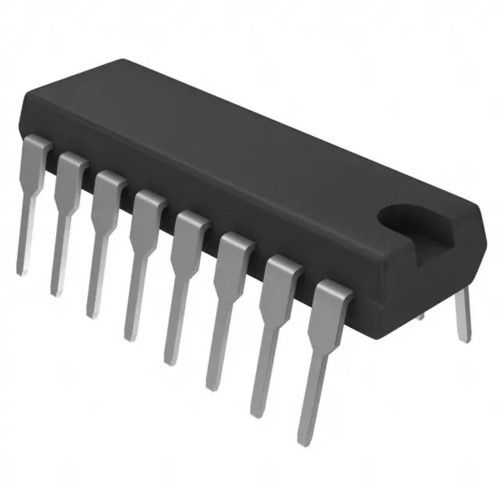
XTR104AP
500 INR
Product Details:
- Resolution Analog
- Output Current Output, 4 mA to 20 mA Linear
- Features On-chip Linearization, Differential & Excitation Current, Remote Sensing, Adjustable Offset & Gain
- Usage Current Transmission of Resistive Sensors
- Response Time Fast (limited by external components)
- Power Supply 7.5V to 40V DC
- Thermal Conductivity Standard (IC package)
- Click to View more
X
XTR104AP Price And Quantity
- 500 INR
- 10 Piece
- Through Hole (DIP) / Surface Mount (SOIC)
- External resistors
- 0.005% FSR typical
- Pb-Free / RoHS Compliant Available
- Tube or Tape & Reel
- Up to 36V
- Adjustable (100A to 1mA)
- External resistors
- High (input terminals for RTD/Bridge)
- <1.2mA
- 1V/C
XTR104AP Product Specifications
- Analog current loop
- XTR104 Analog IC
- Standard DIP/SOIC IC Thickness
- -40C to +85C
- Supports 2-/3-/4-wire Platinum RTDs, Resistive Bridges
- DIP-14: 19.3mm 6.35mm 4.57mm approx.
- Precision Current Transmitter for RTDs/Bridge Sensors
- 40V max (Supply Voltage Range: 7.5V to 40V)
- One Channel per IC
- RTD, Bridge or Thermistor Sensors
- 7.5V to 40V DC
- Current Transmission of Resistive Sensors
- Fast (limited by external components)
- Standard (IC package)
- External DC supply
- 7.5V to 40V
- Analog Integrated Circuit
- Industrial Process Control, Sensor Signal Conditioning
- Current Output, 4 mA to 20 mA Linear
- Analog
- DC to Low Frequency
- DIP-14 or SOIC-14 Package
- Standard IC Package Color
- On-chip Linearization, Differential & Excitation Current, Remote Sensing, Adjustable Offset & Gain
- Approx. 1g (package dependent)
- Max Output Current 25mA
- Through Hole (DIP) / Surface Mount (SOIC)
- External resistors
- 0.005% FSR typical
- Pb-Free / RoHS Compliant Available
- Tube or Tape & Reel
- Up to 36V
- Adjustable (100A to 1mA)
- External resistors
- High (input terminals for RTD/Bridge)
- <1.2mA
- 1V/C
XTR104AP Trade Information
- All India
Product Description
Specification
| CMRR Common Mode Rejection Ratio | 80 dB |
| Vos Input Offset Voltage | 2.5 mV |
| Unit Weight | 0.057419 oz |
| Supply Voltage Min | 9 V |
| Supply Voltage Max | 40 V |
| Subcategory | Amplifier ICs |
| Package Case | PDIP-16 |
| Operating Supply Voltage | 12 V, 15 V, 18 V, 24 V, 28 V |
| Operating Supply Current | 20 mA |
| Number of Channels | 1 Channel |
| Mounting Style | Through Hole |
| Minimum Operating Temperature | - 40 C |
| Maximum Operating Temperature | + 85 C |
| Ib Input Bias Current | 0.25 uA |
High Accuracy Sensor Signal Conditioning
XTR104AP sets a benchmark for transmitting precise analog signals from RTDs and bridge sensors in industrial automation. On-chip linearization optimizes measurement accuracy, while an adjustable current source provides tailored sensor excitation. This combination ensures consistent, reliable data transmission across long distances in challenging environments.
Broad Compatibility & Versatile Mounting
Supporting 2-, 3-, and 4-wire platinum RTDs and a variety of resistive bridge sensors, the XTR104AP offers flexibility essential for modern process control. Offered in DIP or SOIC packages with Pb-Free/RoHS options, it suits through-hole and SMT assembly. This makes integration easy for distributors, manufacturers, and system designers alike.
Efficiency and Robust Performance
With less than 1.2mA quiescent current and up to 25mA output, the XTR104AP operates efficiently across a wide voltage range (7.5V to 40V). Its robust design delivers reliable performance in temperature ranges from 40C to +85C, making it ideal for harsh industrial settings and mission-critical sensor applications.
FAQs of XTR104AP:
Q: How is the excitation current adjusted for different sensors in the XTR104AP?
A: Excitation current in the XTR104AP is set by external resistors, enabling precise adjustments from 100A to 1mA. This flexibility ensures compatibility with a wide range of sensor types and requirements.Q: What types of sensors does the XTR104AP support and in what configurations?
A: The XTR104AP is designed for resistive sensors, including 2-, 3-, and 4-wire platinum RTDs, resistive bridges, and thermistors, allowing versatile use in industrial sensing environments.Q: When should you use the gain and offset adjustment features?
A: Gain and offset adjustments, made via external resistors, are used during installation or calibration to align sensor output with the system requirements and to correct for any sensor or wiring variations.Q: Where can the XTR104AP be mounted, and what packaging options are available?
A: It is available in both standard through-hole DIP-14 and surface mount SOIC-14 packages. Packaging options include tube and tape & reel, suitable for various assembly and distribution needs.Q: What is the process for integrating the XTR104AP into an analog current loop in industrial applications?
A: Integration involves connecting the sensor to the input terminals, setting the desired excitation current, connecting power (7.5V40V DC), and configuring gain/offset resistors as needed. Output is routed via the standard 420mA current loop, compatible with process control systems.Q: How does using the XTR104AP benefit industrial sensing and control systems?
A: Its precise signal conditioning, low offset drift, and robust linearity enable accurate, stable, and long-range sensor data transmission. This enhances process reliability and measurement integrity in demanding environments.Tell us about your requirement

Price:
Quantity
Select Unit
- 50
- 100
- 200
- 250
- 500
- 1000+
Additional detail
Mobile number
Email

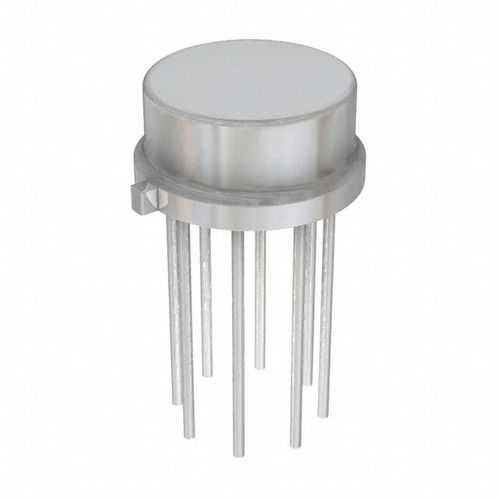
Other Products in 'Burr - Brown ICs' category


Contact Details
KK INTERNATIONAL
Mumbai, Maharashtra, India
Mumbai, Maharashtra, India

- Plot No. 305, Rajdeep Apartments, Tara Temple Lane, Near Lamington Road,Mumbai - 400007, Maharashtra, India
- Phone : 08045477473
- Mr Pratik Chouhan (Managing Director)
- Mobile : 08045477473
-
 Send Inquiry
 Send Inquiry
 Send Inquiry
 Send SMS
Quick Inquiry

 |
KK INTERNATIONAL
All Rights Reserved.(Terms of Use) Developed and Managed by Infocom Network Private Limited. |
