


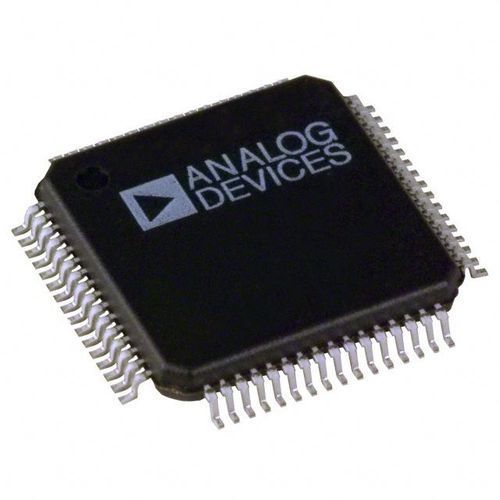
ANALOG DEVICES IC
100 INR/Piece
Product Details:
- Sensors Specification Compatible with external analog sensors
- Components Transistors, Capacitors, Resistors
- Features Low Power Consumption, High Precision, Stable Output
- Thermal Conductivity Low
- Input Analog Input
- Power Supply DC Power
- Power Source DC Electrical
- Click to View more
X
ANALOG DEVICES IC Price And Quantity
- 20 Piece
- 100 INR/Piece
- 300 mW
- Refer to product datasheet
- 8
- Available
- 1.27 mm
- 1 Piece
- Signal Conditioning, Data Acquisition, Amplification
- Yes
- -65°C to +150°C
- 2.7V to 5.5V
- SOIC-8 / DIP-8 / TSSOP-8
- Low (as per specific device datasheet)
- Surface Mount or Through Hole
- Sn-Pb or Pb-Free
ANALOG DEVICES IC Product Specifications
- Integrated Circuit (IC)
- DC Electrical
- Microsecond range
- Consumer Electronics, Industrial Control, Measurement Systems
- Approx. 2 grams
- DC Power
- Up to 50 MHz
- Black
- Low Power Consumption, High Precision, Stable Output
- Standard SOP/DIP Package
- Low
- 10 mA max
- 2.7V to 5.5V
- Analog Input
- 5V DC
- Compatible with external analog sensors
- Transistors, Capacitors, Resistors
- Analog Signal Processing
- SPI / I2C / Parallel (depending on model)
- -40C to 85C
- 9.8 mm x 6.4 mm x 0.3 mm
- 0.3 mm
- Electronic Circuits
- Analog/Digital Output
- 12/14/16-bit (depending on IC model)
- 300 mW
- Refer to product datasheet
- 8
- Available
- 1.27 mm
- 1 Piece
- Signal Conditioning, Data Acquisition, Amplification
- Yes
- -65°C to +150°C
- 2.7V to 5.5V
- SOIC-8 / DIP-8 / TSSOP-8
- Low (as per specific device datasheet)
- Surface Mount or Through Hole
- Sn-Pb or Pb-Free
ANALOG DEVICES IC Trade Information
- Cash Against Delivery (CAD), Cash in Advance (CID)
- All India
Product Description
This ANALOG DEVICE IC is an essential component in various electronic applications that require high-precision and reliable analog signal processing. It is necessary for signal processing in applications such as audio and video systems, medical devices, industrial control systems, and communication systems. The need for this ANALOG DEVICE IC arises from the fact that many electronic devices require accurate and reliable analog signal processing to function properly. This device is a popular choice for various applications that require precise and reliable analog signal processing.
Precision Analog Signal Processing
Engineered for accuracy, the ANALOG DEVICES IC supports a resolution of 12, 14, or 16 bits depending on the specific model. This enables high-fidelity signal conditioning and data acquisition, essential for applications needing precise measurements. Combined with low input offset voltage and efficient response times, it ensures stable and accurate analog-to-digital or digital-to-analog conversion in your circuits.
Flexible Application and Mounting
With package options including SOIC-8, DIP-8, and TSSOP-8, and support for both surface mount and through-hole assembly, this IC seamlessly fits diverse PCB designs. Its operable temperature range from -40C to 85C and storage capability down to -65C guarantee robust performance in varying environmental conditions, across consumer, industrial, and measurement systems.
Reliable and Compliant Design
Built for long-term, dependable operation, this IC is RoHS compliant and available with Sn-Pb or Pb-Free lead finishes. Extensive ESD protection, low thermal conductivity, and a power dissipation rating up to 300 mW enhance safety and longevity. Its pin pitch of 1.27 mm and standard package dimensions ensure easy integration into existing system layouts.
FAQs of ANALOG DEVICES IC:
Q: How do I choose the appropriate package type for my ANALOG DEVICES IC?
A: Select between SOIC-8, DIP-8, or TSSOP-8 packages based on your PCB assembly needs. Use SOIC-8 or TSSOP-8 for surface mount designs, and DIP-8 for through-hole mounting. Each package maintains the same electrical functionality but offers different mechanical footprints.Q: What is the process for integrating this IC into a data acquisition system?
A: Identify the required resolution (12/14/16-bit) and confirm compatibility with your systems supply voltage (2.7V to 5.5V). Connect the analog input and desired output interface (SPI, I2C, or Parallel). Ensure correct mounting based on your chosen package and adhere to recommended ESD precautions for robust operation.Q: Where can I use this IC for signal amplification?
A: This IC is suitable for use in consumer electronics, industrial control panels, and measurement or instrumentation systems where precision signal amplification is critical. Its low offset voltage and microsecond-range response facilitate high-accuracy and fast signal processing.Q: What are the key benefits of using this RoHS-compliant IC?
A: Advantages include stable and high-precision analog processing, low power consumption, excellent ESD protection, a broad operable temperature range, and environmental compliance. It is also compatible with external analog sensors and supports versatile digital interfaces.Q: How can I ensure reliable operation across different environments?
A: The IC offers an operating temperature range from -40C to 85C and features built-in ESD protection. Proper heat dissipation (up to 300 mW), careful mounting, and adhering to recommended storage temperatures (-65C to +150C) will help maintain reliability.Q: When is it essential to use a lead-free (Pb-Free) version of this IC?
A: Choose the Pb-Free option for applications where RoHS compliance and full environmental safety are required, such as new product designs or markets with strict lead restrictions. The Sn-Pb version is still available for legacy systems where compliance is not a concern.Q: What makes this IC particularly suitable for high-precision sensor applications?
A: Its low input offset voltage, robust ESD protection, and compatibility with a wide range of external analog sensors enable precise analog measurements. Fast response times and flexible interface options (SPI, I2C, or Parallel) ensure it can efficiently process real-time sensor data.Tell us about your requirement

Price:
Quantity
Select Unit
- 50
- 100
- 200
- 250
- 500
- 1000+
Additional detail
Mobile number
Email

Other Products in 'Electronic Components' category


Contact Details
KK INTERNATIONAL
Mumbai, Maharashtra, India
Mumbai, Maharashtra, India

- Plot No. 305, Rajdeep Apartments, Tara Temple Lane, Near Lamington Road,Mumbai - 400007, Maharashtra, India
- Phone : 08045477473
- Mr Pratik Chouhan (Managing Director)
- Mobile : 08045477473
-
 Send Inquiry
 Send Inquiry
 Send Inquiry
 Send SMS
Quick Inquiry

 |
KK INTERNATIONAL
All Rights Reserved.(Terms of Use) Developed and Managed by Infocom Network Private Limited. |
